I thought I had the most rough part behind me, guess not. My car got detained by the customs in Bangladesh. Watch how I handled it in the latest video.

I thought I had the most rough part behind me, guess not. My car got detained by the customs in Bangladesh. Watch how I handled it in the latest video.
We continue the video were we ended the last one… with problems and a headache. In the Wild Wild East. Latest movie now online.
Range Excitement brought us to interesting places and it got tough when we arrived in Sambalpur. Watch the latest video.
Discover Range Excitement in the latest video.
An overheated battery, no chargingpoints and sagging powerlines were some of the issues we had during the first days of the road trip through India. See it in the latest video.
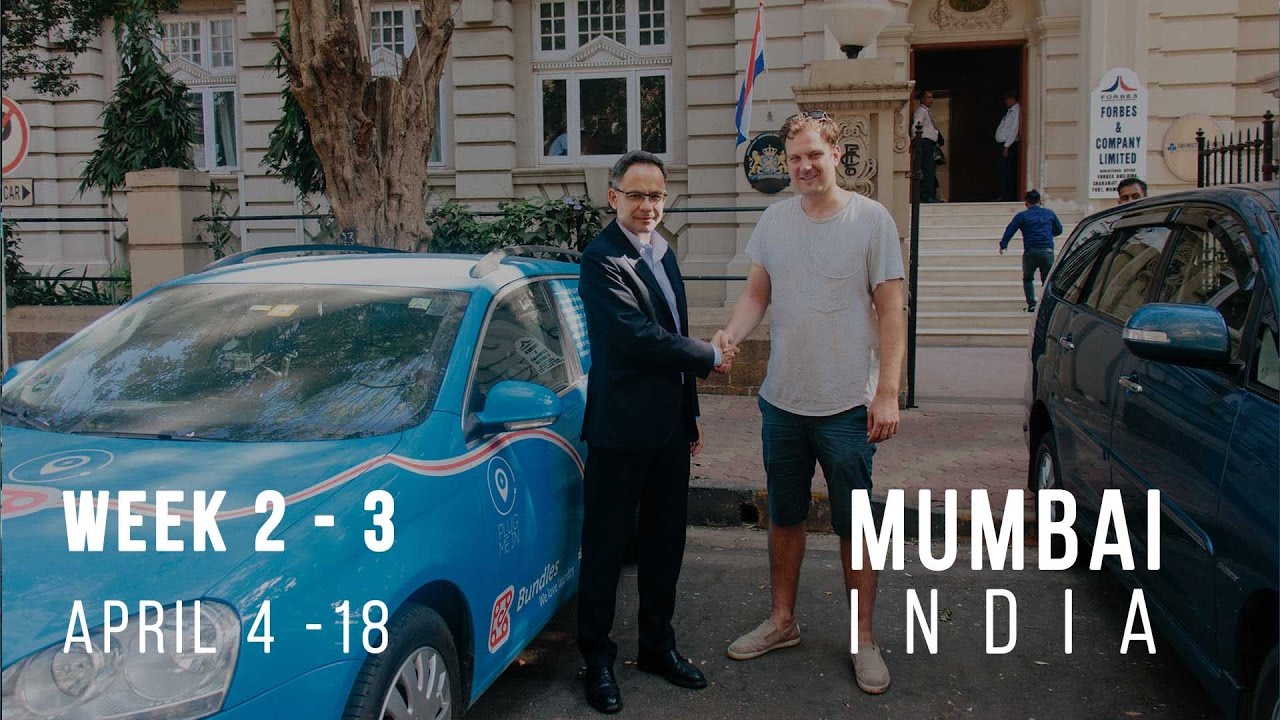
After 3 weeks in Mumbai we started the road trip through India. Watch the latest video.
Hectic & interesting weeks in Mumbai. Watch the latest video.

The United Arab Emirates, the land mostly known as ‘the country were oil comes from.’ In many peoples perception oil will be pumped out of the ground until the desert has evaporated and solar panels will remain science-fiction. During my time in the UAE I discovered that this is definitely not the case and many efforts are made to switch to renewable energy sources and have I seen more initiatives who find it highly important to reduces their carbon footprint.
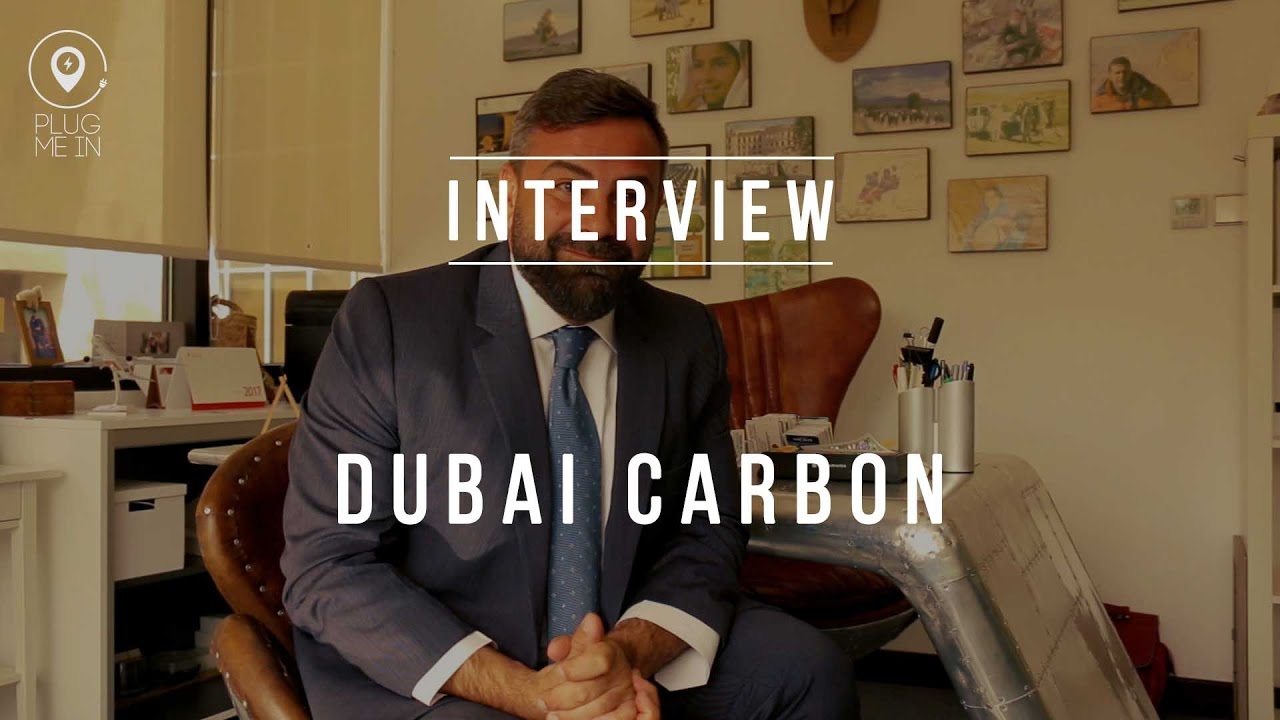
To hear more about how sustainable the country is and efforts that will be made in the future I contacted Dubai Carbon, a think-tank in environmental econmocis which is a co-operation between the Dubai Supreme Council of Energy and the United Nations Development Programme (UNDP). In 2011 this agreement was signed by H.H. Sheikh Mohammed bin Rashid Al Maktoum, Vice President and Prime Minister of the UAE and Ruler of Dubai, H.H. Sheikh Hamdan bin Mohammed bin Rashid Al Maktoum, Crown Prince of Dubai and UN Secretary General Ban ki-Moon. Dubai Carbon’s stakeholders are both public and private and DC helps them include efficiency and best practices within environmental, social and the generic sustainability value chain in their business model.
I interviewed Dubai Carbon’s CEO Ivano Iannelli, who build up a reputation as one of the world’s foremost expert in the fields of sustainability and carbon emissions management.
Q. In a country not well-known for sustainable efforts, how was Dubai Carbon founded?
Mr. Iannelli: “There is a very large culture of excellence in this country and even though it might not be perceived as such from the outside, the sustainability credentials for the UAE are actually extremely high. There is a willingness to excel, there is a willingness to be best in class, there is a culture of corporate excellence. They wouldn’t go for the inefficiënt approach but they want to make sure the resources are looked upon for their preciousness, for their value. Not only in short-term but also a long term-approach.” Referring to Sheik Mohammed bin Rashid Al Maktoum’s visionary ideas on the country.
Q. How is the mix of energy in the UAE?
Mr. Iannelli: “At the moment we have a very minimal solar power but this is only because the large PV-plants will be commissioned in a span of a few months. Dubai has the largest single side PV-plant in the world and has been gradually growing simply because of its success. In a span of 2 years Dubai broke 2 times the world record for lowest tariff for solar, bringing the price down to 2.9 cents, Adu Dhabi even managed to bring it down to 2.4 cents per kWh. These are signs that times are changing and that renewables are becoming cost-effective.”
“When you look at the energy mix you can not rely on only wind or solar but you need to have a balanced approach and Dubai is doing exactly this. By 2050 we will scale up renewables to 75% together with all the other sources who are being tested and launched as we speak.”
“In the current situation we have a very efficient gas-powered combined cycle power plant. Dubai produces power at 0.42 tons of CO2 per MWh produced, the next in-line is Germany, producing at 0.39 tons of CO2 per MWh but Germany add a very large amount of renewables in their mix. To give you an idea of how efficient the fossil fuel based energy production in Dubai is compared to the globe.
Mr. Ianelli add thats the misconception of Dubai being inneficient or not sustainable is very superficial. “If people understand what this city has achieved within a short span of time than they would be able to understand what there is. First of all there is a fantastic playing field of sustainability because not a single played in this city has not looked at sustainability in their scope of work. The second element of it is that to do what Dubai has done, they need to be highly efficient, they need to be very pragmatic in the way they use resources because they would otherwise upset the normally economic close of supply and demand. So to build this much you don’t put too much strain on the market because prices would escalate. So this balance what the city has achieved in economic term is a fantastic example of economic success in terms of sustainability, that should be looked upon and replicated whenever possible.
During my journey I started to wonder if it’s possible for a country to become carbon-neutral, and is it necessary? I saw Norway were they produce 98% of their energy from renewables but still have a lot of offset because of their richness in oil. I heard from South-American countries who generate their power 100% from renewables.
Q. Can Dubai or any other country achieve to be carbon-neutral?
Mr. Iannelli: “I don’t think any country in the world can achieve carbon-neutrality because there is always a resource consumption, and we don’t want carbon-neutrality as it will alter the balance of the eco-system. What we want is to run within the global CO2 budget. There are natural sorts of CO2 things in the world, soil, trees, water etc. So we don’t need to actually achieve carbon-neutrality. What we have is a global-warming potential which equates all sorts of greenhouse-gasses to CO2 according to the time it takes the globe to metabolize them. In the 21st century the number is 1466 gigatons of CO2. What we need to reach is that countries not consume more than the world can metabolize. Currently the world is consuming at an alarming rate. The herd offshoot day (the days we consumed all the resources for the year) last year was on September 26. So as an impact we don’t need to achieve carbon-neutrality, we just need to stat within the carbon-budget that we have been given.
Electric Vehicles
Of course I needed to know how electric cars fit in to the bigger picture. Dubai Electricity and Water Authority (DEWA) is also involved in Dubai Carbon and has place already 100 charging stations in Dubai and just announced the second phase of stations which will double the amount. With only 57 users so far they definitely see a big future for electric mobility.
Mr. Iannelli: “The vehicles that are being brought here are being stresstest against a different kind of environment. Dubai as a city is stretched along the coast it’s a lot less dense and longer distances are needed to be covered by EV’s.
Full interview
Watch the full interview here
A new video about the first week in Mumbai. It may contain some crazy yet hilarious scenes. Watch it here.

At my next stop in Kashan I was supposed to stay at a friend of someone I met in Tehran. Last night I received a message that they had to get out of town. I had a look at the replies on my Instagram post and there were many people who offered me a place to stay in Kashan so I contacted one of them and 10 minutes later it was confirmed. I love the power of social media. He said he would wait for me at the toll gate at his city. I started driving and suddenly there was a split with 2 options: Kashan or Kashan. I decided to go to Kashan but I would find out this was not the highway but a smaller road. Probably it was the more scenic and interesting route . I arrived in the city without passing the pay toll so I sent him my location via Telegram and a few minutes later he, Saeed, and his sister and cousin picked me up. They all spoke very well English. I followed them to their were the rest of the family was waiting. We had lunch on the floor and they laughed a lot about my tryings to sit in crossed-legged just like them, my muscles are not so flexible anymore. Everything happens on the ground here and they laughed a lot when I asked them why they have a dinning table here as I thought it was just for decoration.
We explored the city and they brought me to Fin Garden. A historical Persian garden with a story. It contains Kashan’s Fin Bath, where Amir Kabir, the Qajarid chancellor, was murdered by an assassin sent by King Nasereddin Shah in 1852. Completed in 1590, the Fin Garden is the oldest extant garden in Iran.
Next stop The Tabātabāei House, a historic house. It was built in the early 1880s for the affluent Tabatabaei family. It consists of four courtyards, wall paintings with elegant stained glass windows, and includes other classic features of traditional Persian residential architecture, such as biruni and andaruni. The house is almost 5,000 square meters and has been very well renovated. The interior yards have beautiful gardens.
The house had belonged to a trader man in carpet field. the most important trade of Kashan is rugs and carpets and many of rich men are in carpets and textiles fields in this city.
For dinner they decided to change from the floor to the dinning table, a more convenient way to conserve the meal. Iranian food is similar to Turkish food. A lot of meat, kebab, chicken and bread. The breads are different tough, it are long flat beds.
We visited the old bazar in Kashan, a 2 kilometers long indoor street with many small shops. You can buy everything here: from cow eyes to fans and brooms to carpets. Kashan is one of the 4 carpet capitals in Iran. They still make it all by hand here. The bazaar has a famous architecture, especially at its Timche-ye Amin od-Dowleh section, where a grand light well was built in the 19th century. The bazaar is still in use and is a few miles in total length. In the bazaar’s complex beside the main bazaars, there are several mosques, tombs, caravanserais, arcades, baths, and water reservoirs that each were constructed in a different period.
PICTURES