Berlin has become one of my favorite cities. It is raw, big, colorful and very alive. I stayed here four days and met many people. Highlight was that I met the German State Secretary of Environment Gunther Adler. I interviewed The Green Music Initiative and PlugSurfing.
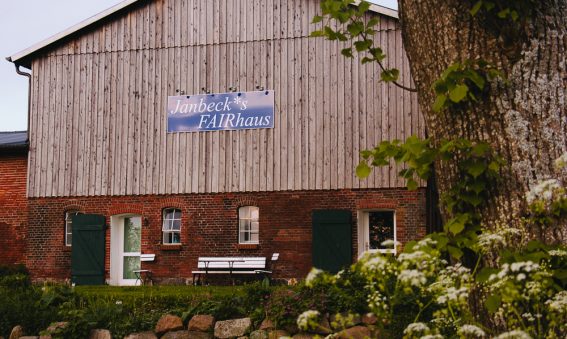
I spend all day in Gelting at the Fairhaus. Stephan explained me how they try to make the accommodation as sustainable as possible. I was quite impressed.
Energy, heat, water and food are the most important things when it comes to housing. When they started this project in 2002 they already tried to make all those aspects as sustainable as possible. And it was a big challenge as it was an old farm with poor isolation.
Energy
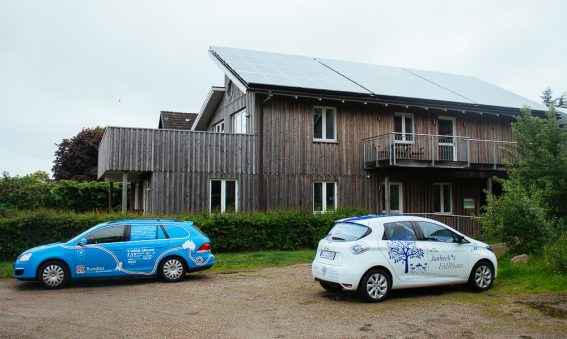
They produce energy with 110M2 solar panels and 20M2 solar thermal collectors. They have a big battery of 42KWh to store energy where 21KWh is used effectively to not damage the battery. An intelligent energy system makes a balance of when to give back energy to the grid and when to take energy from it. Last year the Fairhouse needed 25.336KWh. With the solar panels they produce 13.000 KWh annually, 27.000KWh is produced by the two heat and power plants. In total 41.080 KWh was produced last year. 20.000 KWh was provided back to the grid and they only took 4.838 KWh from it, which is quite impressive considering the size of the accommodation.
The Fairhause’s car fleet consists of three electric cars: a Zoe, a Think City and what they call the ‘E-Wolf’: an converted Fiat Panda. The cars can be charged with type 2, CEE 32A and 16A on 43KWh max and is free for customers.
Water
The water in the Fairhouse has four life cycles, fresh from the shower is collected into a drain where the solid water is naturally cleaned by wastewater treatment plants and becoming liquid. The liquid water then goes to a wetland where it slowly drops into the ground and as it goes through sand and plants it gets clean to the level of bathing water. The 2nd lifecycle is used to flush the toilets, the third for the washing machine and the fourth and final lifecycle for gardening. It takes two years for the solid water to get a clean, the cycle of liquid water only a day. This way around 50% of the water is reused. Sometimes water from the regular system is used as back-up, last year it was not necessary, in 2014 only one week.
Food
The food served at breakfast is organic and locally produced. The owner Uta makes her own jams and bread. The breakfast is well portioned and rather refilled on request instead of thrown away. Plastic won’t be found as they only use glass bottles which are re-used. Coffee waste is used as a barrier to keep snails away from the garden.
Recycling/ Upcycling
The many necessities used throughout the apartments are recycled or upcycled. Old towels are recycled to bathmaths, old sheets to roll bags.
Janbeck’s Fairhouse has been very interesting for me as this was really the first time that I saw that it’s possible to reduce the carbon footprint to nearby 0. I thought it was hard for a normal house but for a accommodation of this size I couldn’t even imagine being it this impressive. It really is an eyeopener and a great example of how sustainability in the recreation sector can be applied.
Janbeck’s Fairhouse is a sustainable accommodation in Gelting, Germany near the Baltic sea and the Danish border. It is owned by Uta & Stephan Janbeck. In 2002 they bought this old farm with the goal to make a sustainable hotel.
Energy, heat, water and food are the most important things when it comes to housing. When they started this project in 2002 they already tried to make all those aspects as sustainable as possible. And it was a big challenge as it was an old farm with poor isolation.
Energy
They produce energy with 110M2 solar panels and 20M2 solar thermal collectors. They have a big battery of 42KWh to store energy where 21KWh is used effectively to not damage the battery. An intelligent energy system makes a balance of when to give back energy to the grid and when to take energy from it. Last year the Fairhouse needed 25.336KWh. With the solar panels they produce 13.000 KWh annually, 27.000KWh is produced by the two heat and power plants. In total 41.080 KWh was produced last year. 20.000 KWh was provided back to the grid and they only took 4.838 KWh from it, which is quite impressive considering the size of the accommodation.
The Fairhause’s car fleet consists of three electric cars: a Zoe, a Think City and what they call the ‘E-Wolf’: an converted Fiat Panda. The cars can be charged with type 2, CEE 32A and 16A on 43KWh max and is free for customers.
Water
The water in the Fairhouse has four life cycles, fresh from the shower is collected into a drain where the solid water is naturally cleaned by wastewater treatment plants and becoming liquid. The liquid water then goes to a wetland where it slowly drops into the ground and as it goes through sand and plants it gets clean to the level of bathing water. The 2nd lifecycle is used to flush the toilets, the third for the washing machine and the fourth and final lifecycle for gardening. It takes two years for the solid water to get a clean, the cycle of liquid water only a day. This way around 50% of the water is reused. Sometimes water from the regular system is used as back-up, last year it was not necessary, in 2014 only one week.
Food
The food served at breakfast is organic and locally produced. The owner Uta makes her own jams and bread. The breakfast is well portioned and rather refilled on request instead of thrown away. Plastic won’t be found as they only use glass bottles which are re-used. Coffee waste is used as a barrier to keep snails away from the garden.
Recycling/ Upcycling
The many necessities used throughout the apartments are recycled or upcycled. Old towels are recycled to bathmaths, old sheets to roll bags.
Janbeck’s Fairhouse has been very interesting for me as this was really the first time that I saw that it’s possible to reduce the carbon footprint to nearby 0. I thought it was hard for a normal house but for a accommodation of this size I couldn’t even imagine being it this impressive. It really is an eyeopener and a great example of how sustainability in the recreation sector can be applied.
Younited Cultures was founded by Andra Slaats and Iulia Mugescu. Andra is a Romanian immigrant who moved to Vienna. She encountered lots of struggles moving here and with Younited Cultures they want to shine a positive light on immigrants and show that they have value. They are doing this by selling colorful scarfs with a message. Each scarf tells a succes story of an immigrant.
In Austria there is a big debat going on at the moment about the new minister of the country. With the elections recently two candidates where facing each other, one extreme right wing and one left wing. Migration (the refugee crisis) is also a topic of discussion in the election program so it’s clear that there is still a lot of work to do.
Andra believes that immigrants have a positive impact on the society and economy, it brings in a lot of youth and human capital. The scarfs can contribute to better understanding of the migrants and hopefully to a good end of the debate going on in Austria.
Stephan, one of the owners of Janbeck’s Fairhaus let me drive in his Zoe. It was my first experience in this car and it was wat you expect from an EV: silent and fast. I drove to a garage a couple of miles further. Not to fix anything but to meet Hanno, the owner of the garage and apparently a huge EV-lover, I would soon find out. In his carpark where 8 Mitsubishi I-Mievs, some old ones with 45.000km on the meter and also some fairly new ones with just 80KM and a fair price too.
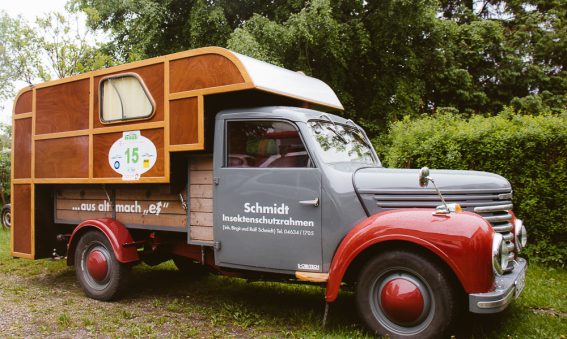
Hanno apparently was also a contestant in the Wave Trophy and wanted to show me something. He has been converting his own car to fully electric and not an average car, the Barkas V 901/2 (I had to look to this up on WikiPedia as I know nothing about cars but I was kind of impressed by this one). It was just like it came out of the movies. Nicely refurbished and all with many details from the 50’s still in tact. He even made the old fuel gage indicating the level of the battery. From the Zoe I made some nice shots from it while driving and you will see this later in the weekly video update.
With Stephan I drove back to the Fairhouse and changed car and co-pilot. With Uta I drove to a school nearby. The Wave Trophy is starting soon and this year 5000 schoolkids made drawings with a message about what they want to change in the world. All these drawings are collected and at the finish of the Wave they well hand these over at the UN Headquarter in Bern. Uta came by to see how things are progressing at her school. Every contestant needs to collect these messages and give the children info about the race and sustainability.
Then we drove the harbor where we met Stephan again and had some fish & chips. On the way back I let Stephan drive my car and he enjoyed it. At first he found it hard to believe that my Type 2 plug on the car had a female connector as a standard plug has male one (nerd fact).
Back home I cleaned the car. The last time I did this thoroughly was in Switzerland so it needed some refreshment. I took everything out, cleaned it and reorganized the car. Later we would have dinner at a local restaurant. If I have the choice about what to eat I always choose a speciality from the country. This time I went for Schnitzel, damn good choice.
Uta and Stephan are taking really good care of me, I can stay here even one more night longer in this huge apartment and catch up with some work!
We woke up at around 10 in the morning. Slept like 12 hours, pretty damn good.
My mother left around 1 because she had to drive back 5 hours to Haarlem. I could stay in the apartment for a few more hours and I wrote the last blog and started editing the Berlin video.
Speaking of video, I changed my “vloging” updates a bit. After doing this for two months I’ve found out that it’s just not really my thing. I always enjoyed making and editing movies but being in front of the camera is not what I like to do most. I believe I can express myself better with text and besides that it takes a huge amount of time to edit, render and upload the videos and with the other tasks I have to do it’s hard to keep up with. So from now on I will post a blog daily and it will be easier to follow me realtime. I will keep doing video but it will be on weekly basis and and in a different format.
Back to Hamburg. I left this city at around 5pm. I had to rearrange the car as my mother brought 4 new boxes of Doppers, I took 4 with me in the beginning but they didn’t fit all. As I’m going only farther away from home this was the last change to take them with me.
My next plugger was Uta in Gelting, a tiny place near the Baltic sea and the Danish border. Uta is the owner of Janbeck’s Fairhaus, she wrote me that she makes delicious cake’s so I couldn’t resist going there. Also she had been following me for a long time and I knew she was involved in the Wave Trophy as many people who I visited earlier mentioned here name.
Gelting was 160KM from Hamburg and it was a nice drive to this place, beautifully rustic. The Fairhaus is located next to a field and Uta and her husband Stephan where already waiting for me. It was around 7pm. That they care about the environment was clear from the beginning, they had a Zoë, a Think City (Danish e-car which I had never seen before) and they have this thing called the E-Wolf. They told me it’s a great car and they are going it to show me later.
Uta showed me my room, it was huge appartement and I thought I would share this with other people but I came to found out this is all mine! It really is the biggest place where I have stayed so far. Pretty luxurious too. It got a main bedroom and even another room with 2 single beds, enough to put my ego on.
Because Im going to stay here two nights it was not necessary to charge the car immediately and Stephan thought it would be better to do it tomorrow, as we could charge the car 100% on solar energy. The house has many sustainable aspects and they are going to tell me everything about that tomorrow.
This morning the sun woke me up in the car at 5.45AM, I slept pretty good after that long day. The car was charged to 70% which is normally enough to drive to remaining 108 kilometers to Hamburg. The car charged for about 9 hours on a 3.5KWh charging station at this Hyuandai dealer. I re-arranged the car from sleep mode to driving mode and drove to Hamburg where my mother was waiting for me. I should meet her the night before but you know what happened. It was no problem for her as she had a friend here who she visited.
It was nice to see her again and have someone with me who I already knew. Meeting new people everyday is great but after a while it’s nice to talk about different and deeper things (struggles etc).
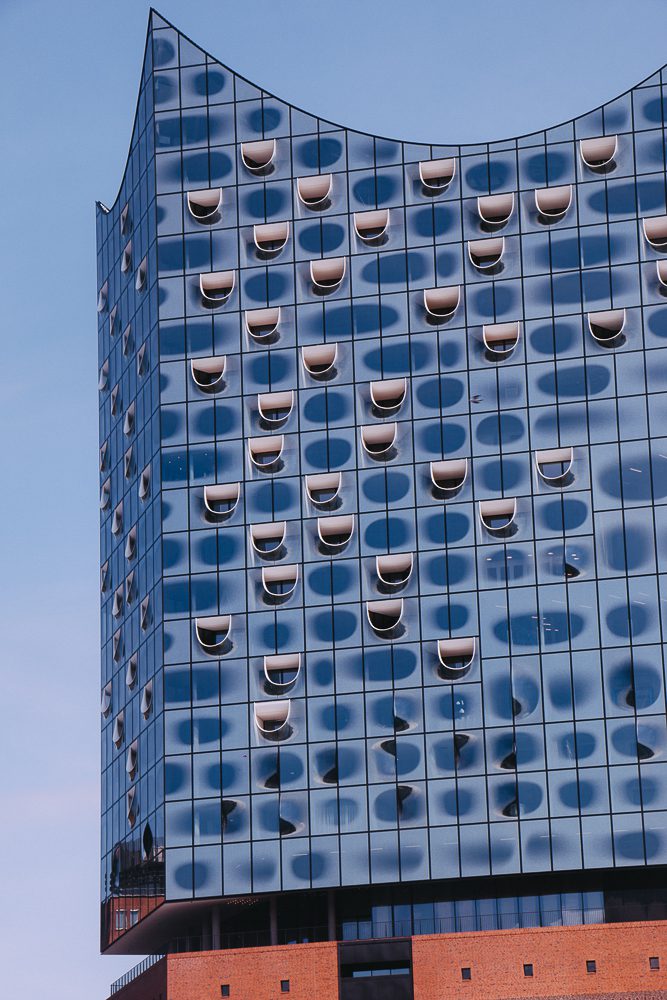
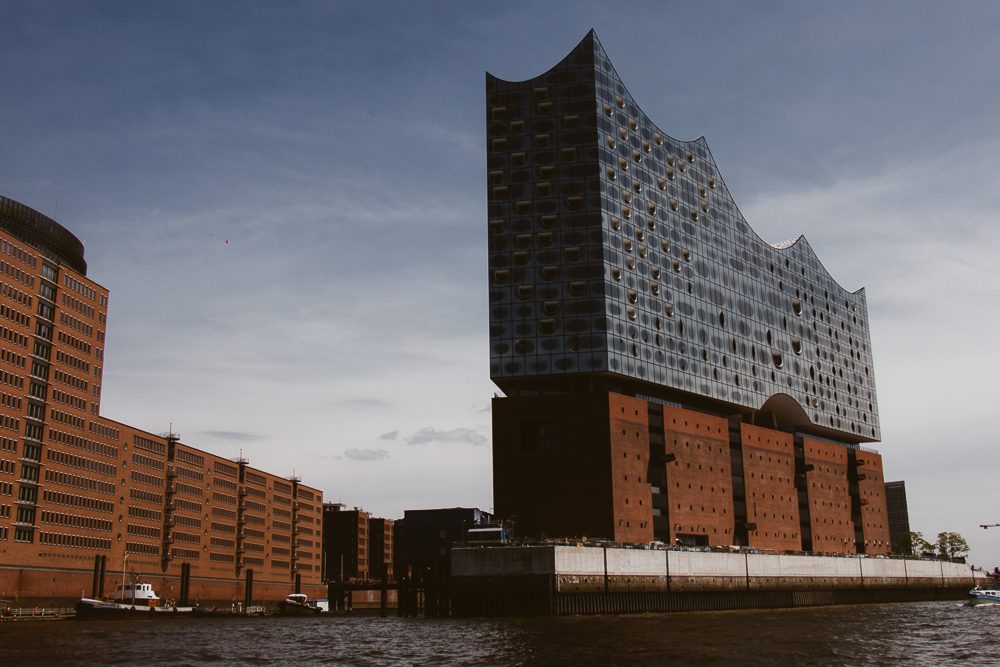
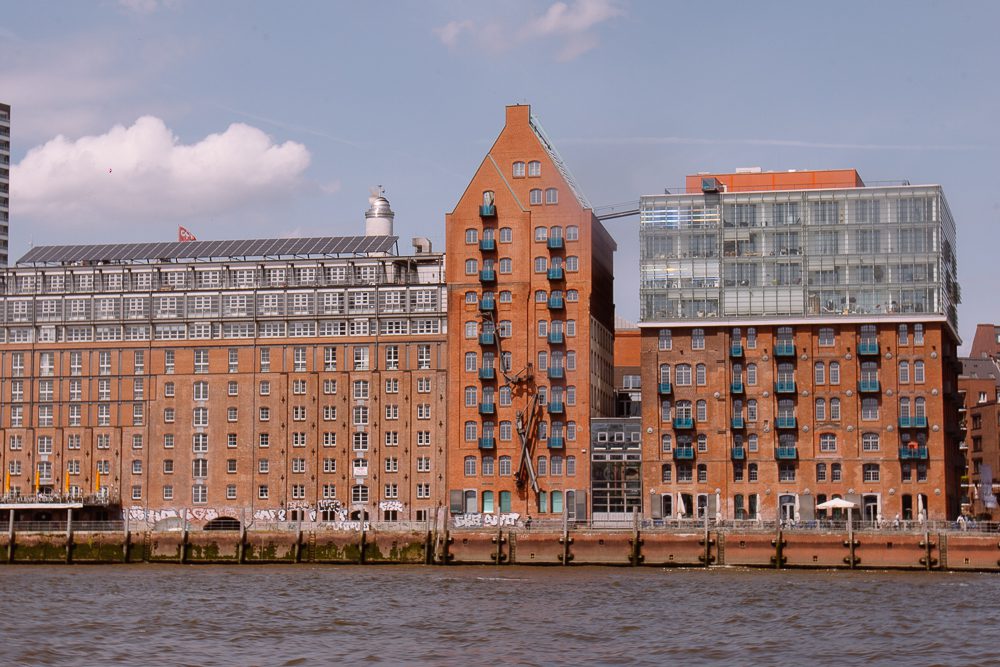
We explored hamburg which is really a beautiful city, it has a huge harbor (the third biggest in Europe) and it was build around the same time as Amsterdam and some buildings have similar styles. My favorite part is Speichelstadt where they have these old buildings surrounded by water. Water is everywhere in Hamburg and the city has more bridges then Venice & Amsterdam combined.
Hamburg is home to 4.3 million people and the 2nd biggest city in Germany. 1.8 million people live in the city centre. The city was awarded European Green Capital in 2011 by the European Committee. They have an ambitious Climate Action Plan which covers more than 360 projects and measures to cut CO2-emissions by 2 million tons from 2007 – 2012 and to reduce the overall carbon footprint by 40% until 2020 (compared to baseline 1990). The city budget provides an additional annual funding of 25 m. Euro (approx. 120 m. Euro up to 2012).
E-mobility
Hamburg’s government has ambitious plans to make the city suitable for electric vehicles. This comes a bit late as the first public charging station was build only in April 2015 (source). In late 2016 a total of 600 charging stations must be installed, 70 of them will have DC fast charging possibilities. This allows taxi companies to do their business emission-free.
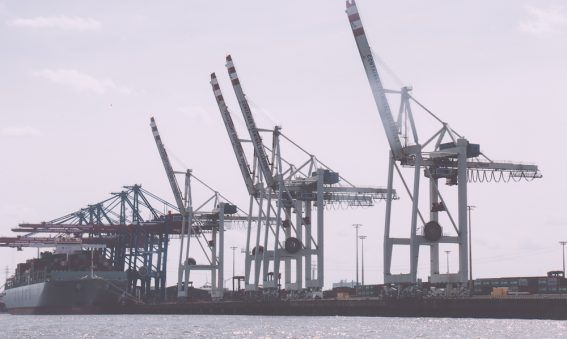
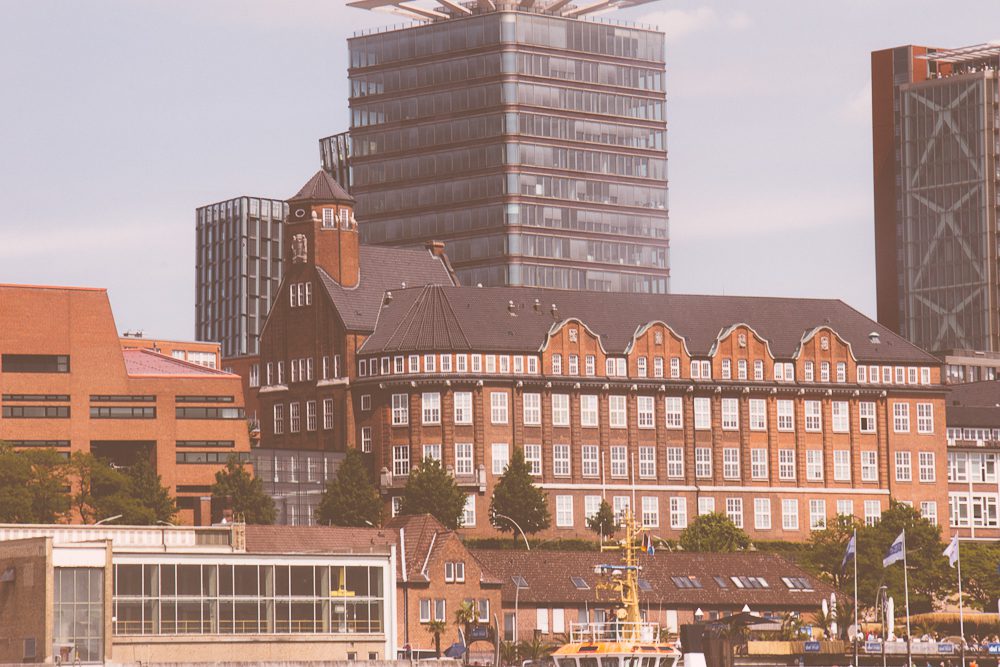
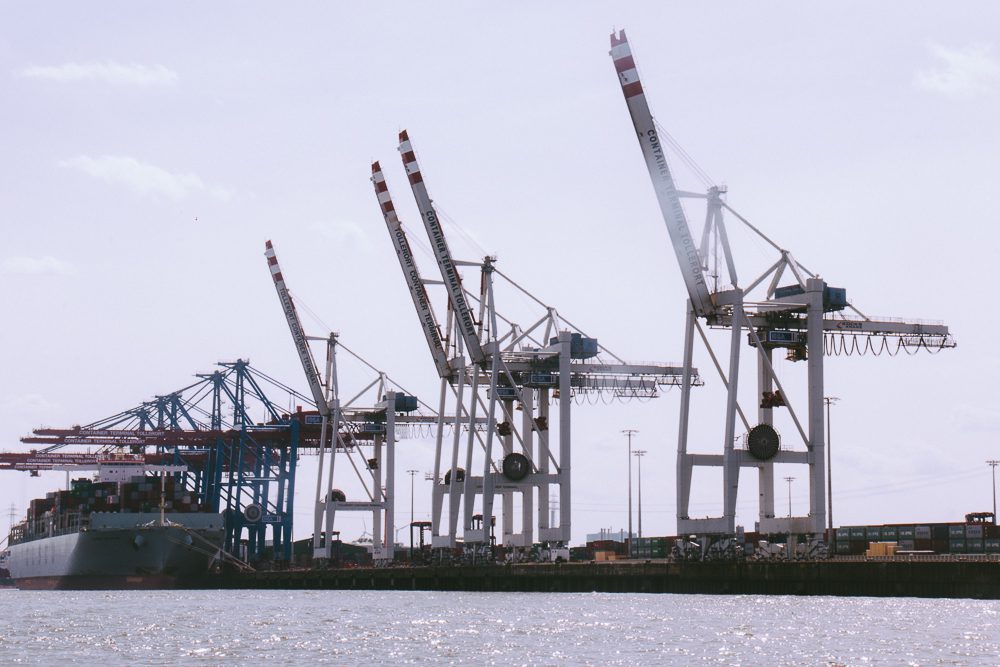
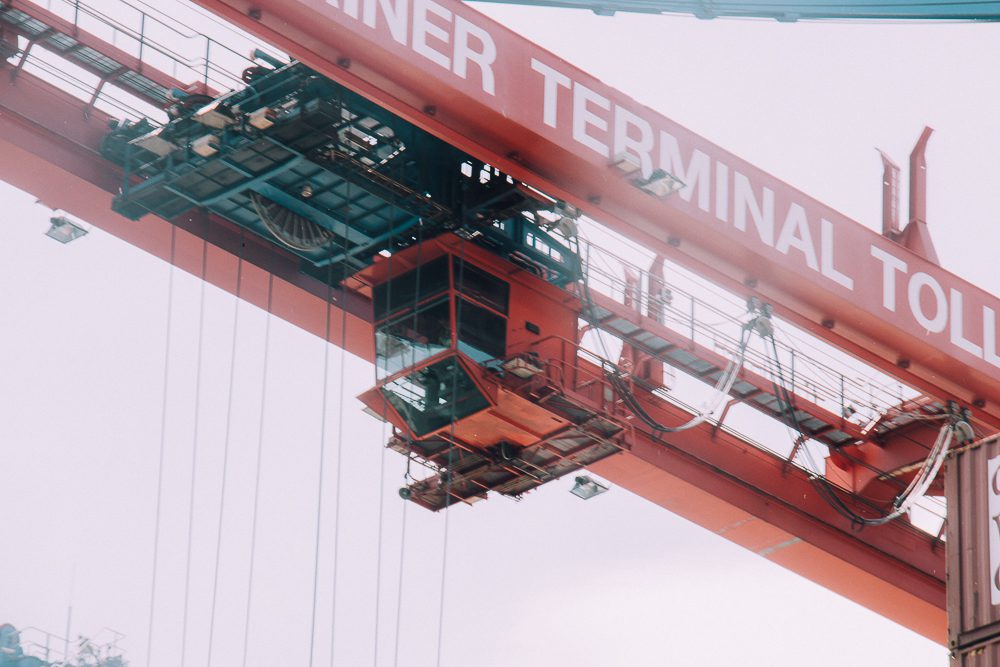
Back to our sightseeing tour. We went on a boat to explore the harbor. First we sailed through the old part, majestic buildings popped up everywhere and in of them fellow Dutchman Joop van den Ende had his Academy, that guy is everywhere. Then to the new modern part. It’s huge! Cranes, docks, containers and people everywhere. Windmills are placed throughout the harbor but I can’t imagine that this will power the whole area.
By foot we went to the city centre. The city has two faces, the old industrial but yet majestic part and the new impressive industrial side. I enjoy both of them. In the heart of the centre you can find many expensive clothing brands and of course, a Tesla store. I didn’t had the opportunity to visit one before, one of the employees was very interested in my story.
We had lunch next to an lake in the centre, we found it a bit to busy, went back to the car which was then 50% charged and went to a park to relax. Today I felt like a king as my mother treated me with ice creams, good food and even new clothes.
Later we went back to the apartment and I couldn’t charge my car on a normal household socket as it was on the fifth level. With the PlugSurfing app I found a station just 1.1KM from our location. The coverage is already very dense, I had many back-ups nearby if the station would have been occupied.
This is where I charged the car overnight in Hamburg.
To provide the best experiences, we use technologies like cookies to store and/or access device information. Consenting to these technologies will allow us to process data such as browsing behavior or unique IDs on this site. Not consenting or withdrawing consent, may adversely affect certain features and functions.
Functional
Always active
The technical storage or access is strictly necessary for the legitimate purpose of enabling the use of a specific service explicitly requested by the subscriber or user, or for the sole purpose of carrying out the transmission of a communication over an electronic communications network.
Preferences
The technical storage or access is necessary for the legitimate purpose of storing preferences that are not requested by the subscriber or user.
Statistics
The technical storage or access that is used exclusively for statistical purposes.The technical storage or access that is used exclusively for anonymous statistical purposes. Without a subpoena, voluntary compliance on the part of your Internet Service Provider, or additional records from a third party, information stored or retrieved for this purpose alone cannot usually be used to identify you.
Marketing
The technical storage or access is required to create user profiles to send advertising, or to track the user on a website or across several websites for similar marketing purposes.