When I checked the car in the morning I found out he wasn’t charged completely, only till 60%. Probably the fuse broke as it wouldn’t charge when I re-plugged the cable. It was a downer as I had to drive 200km to Stockholm today. I went back to Lisa’s house (an hour walk) to check for other charging stations around. In the city they where only found in paid parking garages so that was no option. Outside of the center there where a few and the best option was, again, the ikea. While driving there I crossed a charging station which was not on the map and wanted to check that out. It appeared to be a free one and should charge on 8KWh, which was perfect.
The day I spend at Lisa’s house to work. Lisa was away for a biking competition. Around 6pm I left her house to pick up the car and it was charged 85%, so instead of 8KWh it charged 3KWh, it was not enough to reach Stockholm but I already prepared for this and had a few back-up options. In Vagnhärad there were 2 stations. The first one didn’t work with my car. The second one was special. It was a station with 2 plugs: a Type 2 21KWh and a Type 2 3.5KWh. Wat was special about it was that my cable fitted only in 1 one of the sockets, while they should be exactly the same. Surprising experience. The station didn’t communicate good with the car either. It would charge for a few minutes, then it stopped and would charge again. It’s because of my custom made car doesn’t have to software for all the stations.
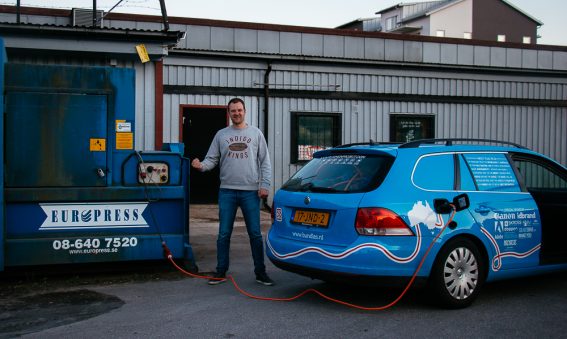
I explored the town and behind a supermarket I saw a press container. This got my attention as I know these containers are always powered with a 32A CEE plug, which means high voltage power and super fast charging. As it was already 10pm and didn’t want to arrive in the morning at my next hosts I decided to be a bit rude. I moved the car to the back of the supermarket, pulled out the cable and plugged it into my car. It worked! A lesson in life: sometimes when you want to proceed in life you need to take some risk. Now I was charging and within 1.5 hours it gained about 30%. Which was enough to reach Stockholm.
Around 11.30 my navigation told me I reached destination. I was not sure where their house was and when I stepped out of the car to have a look, a woman on her bike approached me yelling “Hoiiii” which is Dutch for hello. I knew I arrived right. Their house was a bit hidden between other houses. What caught my eye was that they had a lot of cars at the front of their house. Old cars mainly. There was a reason for that which I tell you tomorrow.
My hosts where Aryan and Lena. Aryan is a Dutch guy who’s been living here since 1987, a year after I was born. His wife Lena is Swedish. We had a short talk and some food and then went to bed, it was late.
Sometimes in you want to get further in life you need to be a bit cheeky.
Last night we tried to charge the car at Tom and Els’ place. Normally charging on 16A is allright, definitely in countries with a strong energy grid. However after a few minutes some lights popped out and we found that one of the fuses broke. We reset the fuse and tried charging on 10A, also that didn’t work. We switched to another group and with an extension cord we plugged in at the garden. From my sleeping room I could see the car’s dashboard light and checked it regularly. After half an hour I would check again and saw the dashboard light went out. I changed Tom’s extension cord with my own because it’s an industrial one. I thought it worked.
At breakfast next morning Tom told me that when he got up during the night he saw it was not charging. The car charged to 69% which was not enough to reach the destination for today which was Linköping. But that were worries for later.
Scania
With Tom I drove to Scania, his workplace. Scania is a carmaker specialized in trucks. The factory in Oskarshamn produces the cabines of the trucks, about 300 a day. When finished they are transported to Zwolle (Netherlands) or Angers (France) for assembly.
I was welcomed by few of Tom’s colleagues and journalists. They where all very interested in what I was doing. You can find one of the interviews here.
They took me inside and gave a presentation about what the company is doing on the terms of sustainability and e-mobility. And they are actually being very innovative. The company has the goal to become carbon-neutral, and for a carmaker that is something you hear not quite often. Of course this is not realized tomorrow but small steps eventually have to lead there. They are not just focussing on making their heave duty vehicles electric but trying to find alternative solutions, which I found very interesting.
Platooning One of the steps is ‘platooning’, automated driving for fuel saving. An intelligent system makes trucks communicate with each other. On the highways trucks will form a line and they will automatically keep the ideal distance. By doing this the aerodynamical drag reduces significantly which saves fuel. Even the truck which leads the platoon becomes more energy efficient because normally the truck will drag vacuumed air behind it. A recent test where they drove from Södertälje (Sweden) to Rotterdam (NL) proved that it saved fuel consumption by 1% compared to driving by yourself.
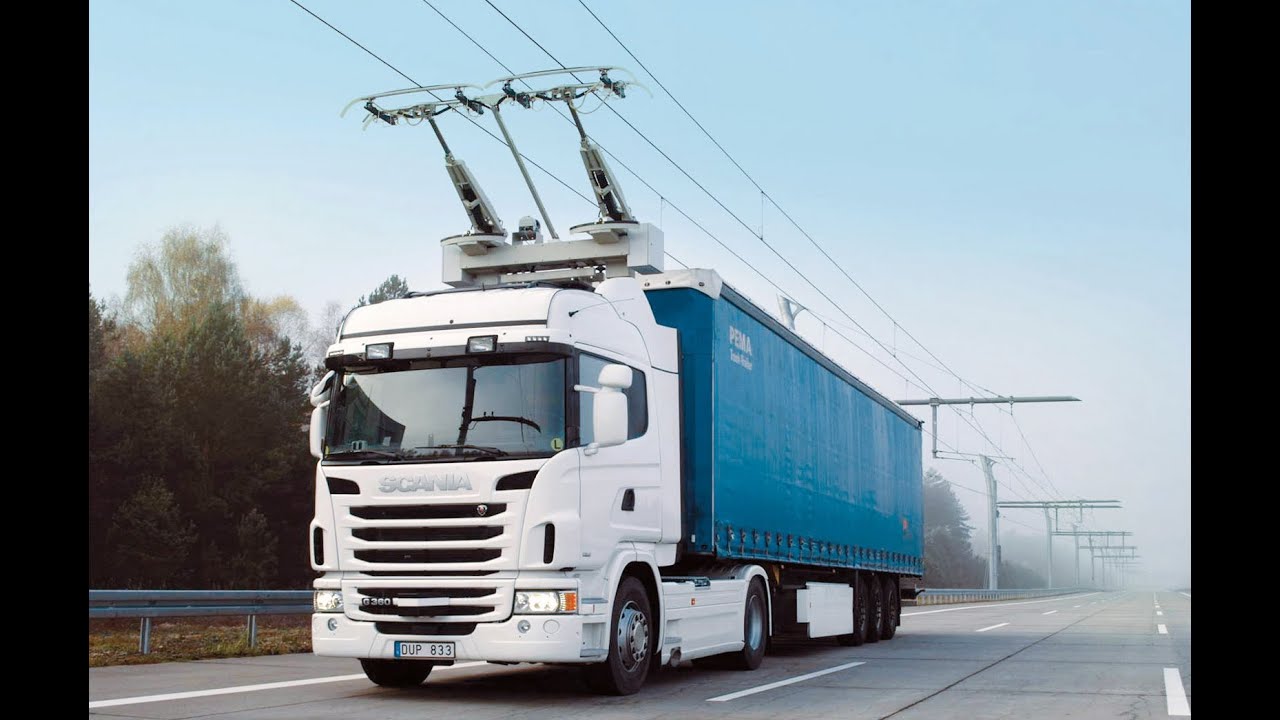
Electric highway My favorite part was the electric highway. It’s a normal highway but with electric wires running over it. The trucks are mounted with a system that connects to the wires and receives electric energy from it. It looks like a trolly but the trucks can disconnect from the grid so they can overtake or leave the highway. When it disconnects from the wires it starts running on the internal combustion engine.
In Germany there is a testtrack and a second one is planned to be build in Sweden. Watch the video to see how it works.
Electric trucks – how the technology works
The factory It was my first time in a large-scale factory like this. There are 2.500 people working in many different roles. The factory is divided in different areas: logistics, press-shop, body shop, paint shop and the assembly line, where the magic happens. All the cabines that are produced here are customer-specific.
Also in the production process they think about the environment. For example the painting process of the trucks has changed significantly over the years. Normally the cars are dipped in to a basin with wet paint and then dried which creates a lot of gasses. At Scania they have a more cleaner process, they use powder. In a closed room the cabins are electrical charged and a robot sprays the powder on the material. 85% sticks to the material and the other 15% is collected and re-used. In this process all the powder is used.
So far most of the companies I visited where small-scale. A company with the size like Scania encounters way other issues then the smaller one so to hear from them what they do about sustainability and e-mobility was seriously interesting.
Hit the road
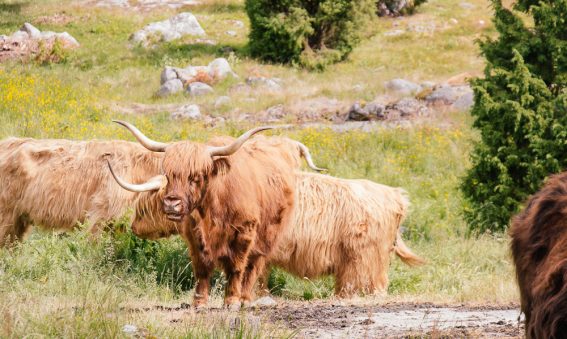
The end-destination for today was Linkoping where I should meet Lisa. It was still early and I had some time to do sightseeing. Tom told me I should really should go see Stensjö. It’s a tiny village close to Oskarshamn which is very traditional Swedish. The road to there was already a joy to drive. I passed fields with huge buffels and many sheep. The fields where separated from the road with wooden fences which look really cool. In Stensjö there where dozens of cute stables, farms and houses. See the pictures below.
Then I needed to find a place to charge. Els made me a list of charging stations in Vastervik. There where some 220v sockets. In Sweden it’s common to have these as they use it to charge the accu of a normal car in extremely cold weather. When I reached 60% I was hoping that it would be enough to do the remaining 100km. Unfortunately it started raining and had to stop one more time to charge. Luckily the cities are dense and you can find these normal stations everywhere.
Linköping
Around 8.30pm I arrived in Linköping with 3% battery left. Lisa was already waiting for me, I met her 7 years ago in Australia and it was great to see her again. She lives right in the middle of the city so we had to drive a few kilometers to a free chargingspot. On the way back we talked a lot about what we did since Australia.
Lisa finished here study and works for a NGO which helps children in need. She really enjoys the outdoors. No alarm clocks, no computers and just being in the nature without any obligations is what gives her energy. We had a lot of fun watching her photo-albums from our time in Ozzie. It seems like such a short time ago but it’s amazing how we changed (or become old but I found that hard to say).
12 hours. That is definitely the longest sleep I had this trip. Around 9 I had breakfast with Pieter who was about to go the a meeting. I stayed there to work. I really wanted to interview someone from the city of Växjö today. Växjö is interesting, they where the first city in the world to set the goal to become independent of fossil fuels by 2030. The heating in the city comes from forrest residues and 35% is generated from biomass.
Pieter gave me some contacts from people he knew within the city’s government and I tried to contact them for an interview, unfortunately it was to short notice. Because I was charging on a socket which is normally for vacuum cleaners I set the charging on 10A, which should be safe. Around 9 in the morning I checked if it was still charging and it was on 91%. When you charge on 10A it takes around 15-16 hours for a full charge. There was a note on my windscreen. Apparently the chairman of the community was not happy that I parked and charged here, grumpy old man.
To Oskarshamn
In the afternoon I continued the journey west to Oskarshamn, close to the Baltic Sea. It was a 136km drive and on the way I saw trees. A lot of trees. But no different ones though. Mostly the same trees. Very long and tall trees. Trees. And a road that between all the trees. It’s not deserted, you will see enough cars on the road and trucks mostly loaded with trees are common here. The trucks are huge though, especially the cabins which are decorated with many big lights as they need that in the winter, when it gets dark around 3pm.
Els & Tom
In Oskarshamn I met Els and Tom, a Dutch couple. Very welcoming people, they even made a welcome sign with my name and the Plug Me In logo! How cool. They are both and highly interested in sustainability and cars. So it comes to no surprise that they both work for Scania and on my way I already passed the factory, just close after the trees. The building was huge, you can’t really miss it and tomorrow I’m going there. Tom told his colleagues about my trip and where very interested and invited me to tell them about my adventures. Scania is also working on e-mobility and they are willing to give me a presentation about their innovative projects.
Tom and Els moved here three years ago when they just had their newborn Veerle. Part of the deal was that Els also could work here so she got a job as physiotherapist at Scania. The houses in Sweden are big and almost always single houses, so was their house. It was located in a residential area and from their garden you could walk straight into a forrest. In their spare they like to take their boat and sail the little islands around Oskarshamn. They would look for a deserted one and go fishing, start a campfire or just do whatever they feel like because that is what the Swedish life is all about.
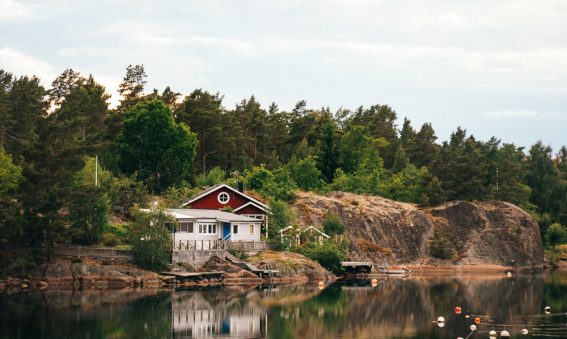
Oskarshamn is small, really small. Just 17.000 people live here. We drove around the town and it has some really interesting beautiful sights. Typical sights like I expected from Sweden. Huts, lakes, boats and rocks.
At around 8am my eyes opened because my ears heard noises coming from the cleaners broomsticks. My bed last night was the car’s front seat and normally I have a decent sleep in there. Last night was different. There where many noises in the carpark and people walking around who woke me up. I felt like a napkin. I moved the car outside as most of the employees where parking right next to me. I fell asleep again.
I went into Helsinborg. A funny sight was the hundreds of teenagers in white dresses and sailor hats. Apparently they just graduated and where on the way to a party, it’s a very traditional thing. Maria texted me that I could come by for pancakes and soup, an offer I can’t refuse. I also took a shower and I could take some pancakes with me for dinner.
For today I had a plugger who lives in Växjö, Maria laughed at me a lot when I pronounced that name. The right pronunciation is Wekskrow (I hope). My host there, Pieter, a Dutch guy said I could come by but he would arrive home late. Because it was a 200km drive I took my time and stopped in Ljunbgy for a charge. In Sweden they use uppladdning.nu to find charging stations. I found a free one which was located at a fast-food restaurant. It was a pole with two regular 220v sockets. One was used to charge a bouncing castle and with the other one I could charge the car.
It was a good decision to charge in between because later I would arrive in Växjö with just 7% left. Around 10pm I picked up Pieter from the train station. He is a professor at the University here and just has a dinner in Kalmar. He is a typical professor, a little bit nutty and messy. In his style but also his house. He was definitely friendly though. He has been living in Sweden for 15 years and doesn’t want to return home, maybe after he retired. He has one daughter who stays here a week and then goes to her mother. Pieter divorced a few years ago.
The problem was the charging of the car. Pieter lived in a community where no cars are allowed. First he thought to bring it to a car sharing pickup-spot but then came with another idea. Near his home was a parking space with a spot to wash the car. It had a vacuum cleaners. As it was late we thought no-one would clean it’s car anymore so we left it there for the night.
I was very tired from last nights endeavor so after a Heineken and some salami sticks I excused myself and went for a wintersleep.
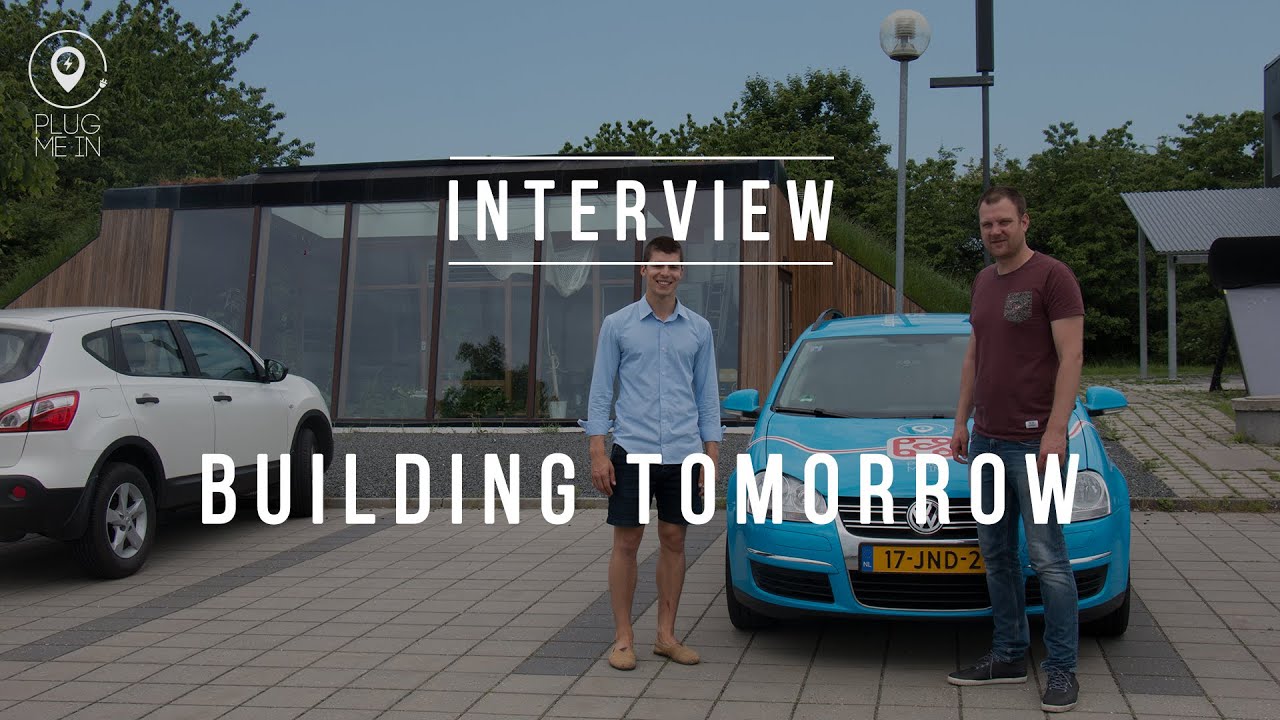
Building Tomorrow is an initiative by Darius Fleming and 8 other students at the VIA University in Horsens, Denmark. They where inspired by the earthship movement and especially the documentary the Garbage Warrior by Michael Reynolds. An earthship is an off-grid house made from recycled materials. Darius put a team together with the right people. Architects, designers, project leaders etc. They convinced their uni and they allowed them to build at their site. So the adventure began. It took them two years of designing and another year to build it.
To make the accommodation completely off-grid they needed a few things: electricity which comes from wind turbines and solar panels. Heating, this comes mainly from the sun. The house is designed towards the sun so it warms and cools itself. And then there is water. Water is collected by rain and filtered by plants in the building.
A small side note has to be made that the current house still takes some energy from the network as it’s not big enough to produce all the power on it’s own but version 2.0 is going to be fully off-grid.
During the process Darius and his teammates learned a lot, they had no experience and did a lot of things that hadn’t been done before. The current house is the first prototype and with their experiences from the last years and their mistakes they will build a new Building Tomorrow.
Watch the full interview with Darius for all information about this project.
The Rockefeller Foundation founded “100 Resilient City’s” in 2013. Their goal is to help cities around the world to become more resilient to the physical, social and economical challenges that are a growing part of the 21st century. Vejle, Denmark is one of those 100 cities. 100RC supports the adoption and incorporation of a view of resilience that includes not just the shocks—earthquakes, fires, floods, etc.—but also the stresses that weaken the fabric of a city on a day to day or cyclical basis. Examples of these stresses include high unemployment; an overtaxed or inefficient public transportation system; endemic violence; or chronic food and water shortages. By addressing both the shocks and the stresses, a city becomes more able to respond to adverse events, and is overall better able to deliver basic functions in both good times and bad, to all populations.
The city of Velje is the only resilient city in Scandinavia and the first in Europe to come with a strategy. Other resilient cities around the world include Washington, New York, Rio de Janeiro, Rotterdam and Singapore. The CRO (Chief Resilience Officer) of Vejle is Jonas Kroustrup and I interviewed Charlotte Holm Andersen & Jette Vindum.
Charlotte & Jette showed welcomed me at the municipality in Vejle where they have an exhibition which explains the all aspects the RC Vejle is working on. The main problem of this city is water. The city is surrounded by mountains and is build around a lake. When it rains a lot the water rises and this can lead to floods. They don’t see this as a problem but as an opportunity. The exhibition is very well designed and interactive. A 3D map shows the history of the city, by sliding through the different years on an iPad the model changes form and shows the growth of the city throughout the years. Also the level of water is indicated and shows how it affects the city.
The way they handle sustainability is something to learn from. They don’t just inform or try to keep everyone to strict rules. They involve the whole community and let everyone have their say in all the projects they are working on. All the gathered input is used in the endproduct.
One of these projects is the Green Tech Center. I was welcome by an very enthusiastic woman named Jeanette. Wat really strikes me is that everyone in the community is very proud of the resilient city and all the projects. The Green Tech Center is based on the triple helix basic: the municipality, university and private sector working closely together. Their goal is to help startups and medium sized companies grow and develop their products within the green field. The green field could be anything from energy production (wind power, geothermal), energy storage and energy usage.
Jeanette introduced me to some to the companies who are working here on innovative ideas. For example she showed Orogenic ApS who makes batteries for electric cars andthere was a company who made the solar panels for the award winning new headquarter of the United Nations in Copenhagen.
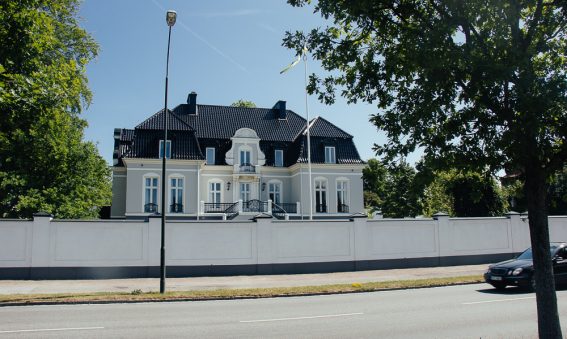
Before I departed to Sweden I had one last meeting in Copenhagen, this time at the United Nations. They have their national headquarters in CPH and the building was finished just three years ago. It grabbed my attention because it won many awards and last week in Vejle I was introduced to the company who made the solar panels for this building.
The UN City building is located right next to a river which provides a natural divider, the building’s protection is high. There is a separate entrance for staff and visitors and all your belongings go through a x-ray scanner, just like a airport.
I was welcomed by Flemming Johanessen. He gave me a tour through the building. The building is based on the UN’s global goals for sustainable development. It’s 50% more sustainable then an average office and 30% of it’s electricity comes from the 1.400 solar panels on the roof which produces 297.000KWh annually. A more in-depth recap will follow later on this page.
After the meeting it was time to head to country number nine: Sweden. To get there you need to take a ferry or pass a bridge. Both cost around 50 Euro so the last days I was looking for a solution to get to the other side. Luckily Mads (where I was staying Saturday) had a great idea. He had the BroBizz pass, it’s a small scanner which you place on your window and when you near the tollbooth it scans it and lets you pass. Mads told me that the last time he wanted to cross the bridge it didn’t work, a woman had to come and would scan the pass manually and let him continue. Mads had the idea to give me the pass, when I would be on the other side he would call the operator and tell them he needs a new one. If they would send him a new pass I could keep the pass, if not I would have to send it back.
I crossed the bridge without any problems and arrived in Sweden, literally the first thing I saw when I passed the border was an IKEA, very typical. As they always have free charging spots and WiFi I decided to work there for a bit. Later I would go into Malmö.
Malmö is famous (at least to my knowledge) for only one thing: the birth- and living place of Zlatan Ibrahimovic. At the IKEA I googled his living address and it was very easy to find so I decided to have a look. It was a huge pink mansion right at the beach. According to his biography Zlatan and his wife liked this house so much that they needed to have it. He left a note for the owners “We want your house, you might think this is a joke but I am serious, we will make sure that you are happy”. They offered the 30 million Kronen, which was four times more then it originally cost and they agreed to that. Unfortunately Zlatan was not at home, they told me he had to play some tournament in France? Haven’t heard about that.
https://www.instagram.com/p/BGW-4S3Eiwj
My sleeping place for tonight was still unsure, I had the other days until Friday fixed but there was not really an offer in the area around Malmö. I posted a message on Facebook to get some help and was waiting for replies. I had one girl who offered me food in Helsingborg so I decided to go to her and make my plan from there.
Maria found me because of a friend in Holland, Annemieke shared a post about plug me in. Maria and Annemieke knew each other from Australia, where they travelled in 2010. Maria is an artist and author. Her paintings are actually really good. She hopes to make a living of this later but also plans to study for more certainty. Maria made chicken for me, chicken is always a good idea.
On the call on Facebook I received many reactions but all of them could either host me later this week or in a place which was not nearby. I had to look for a place where I could charge the car and sleep too. The IKEA seemed like a good option. It was quite and dark there but at 4am they turned on the lights which woke me up, which wasn’t bad as I had the interview with Radio 1 at 4.15am. I found out that I didn’t had service on my phone so I couldn’t receive the call, bad luck, I hope they found a replacement.
Sunday was a national holiday in Denmark. In Roskilde I had breakfast with Mads, drove a bit on his e-bike and then went to Copenhagen. I met with Valerie, I knew her from back home and she just moved here this week. After her study Hotel Management she went traveling for a few months, came back and wanted to do something else. She ended up working here as sales manager for an international company.
Last week I contacted Anders who offered me a place to stay here in Copenhagen. He quickly replied that he was not home this day but a friend of him, Jesper would welcome me and make dinner. Great deal.
Jesper and Anders are close friends and know each other from when they lived in Russia. They are both obsessed with the Baltic states and they have a blog about that. Recently they traveled through those countries with… an electric car! They did it with my smaller brother, the VW E-UP. Jesper showed me a lot of pictures and it was really interesting to see their adventure, especially because I expect that those countries will be the harder part of my trip.
As it was a national holiday there where no shops open and Jesper forgot a bit about that so he got use some pizza’s. Us is Jesper, Ayda and me. Ayda is Ander’s roommate and is a architect from Lithuania.
Day 84 – Monday June 6
Today was a workday. Whenever I have to chance I always try to work. As I had an apartment for myself (Ayda went to work, Jesper left) I took the opportunity to do as much as I can. I’m going into a new country soon so that requires some planning. I do research about sustainable initiatives in a country, send every of them a personal request, need to learn about the traffic regulations, contact people where I can stay, make a press list with Meltwater etc etc.
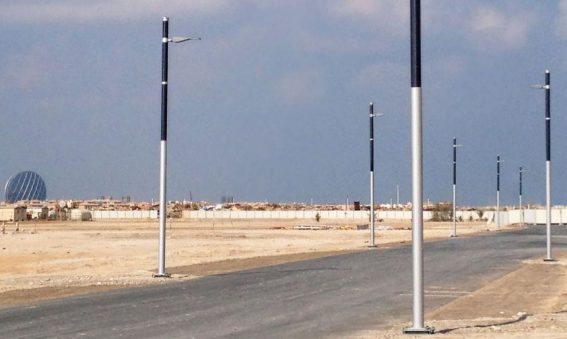
The only appointment today was with Bjarne Schlager. He is a Danish architect and developed the Touche Streetlight. It’s a streetlight powered by the sun and it works off-grid. During the day a battery in the bottom of the streetlight collects energy to use it at night to give light. Also a WiFi device is installed so people can use internet and the developer can see the status of the light.
The lights can be found in many European countries and also in the Middle-East. Later you can find a complete recap about the meeting on this website.
At around 11pm Anders returned home from his trip to the Ukraine. He is a very enthusiastic guy and very interested in my project and especially about the car. I showed Anders how the car was made and shared some tech specs.
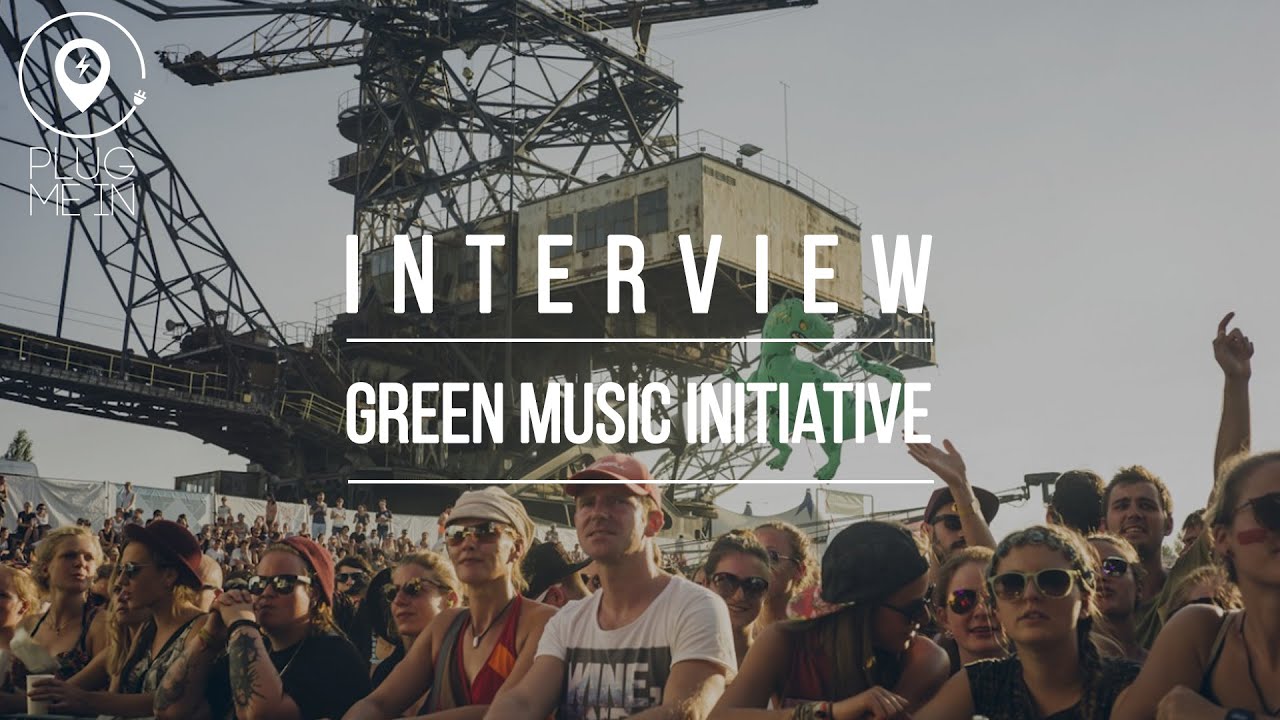
The Green Music Initiative is a think tank for the creative industry, trying to understand how to create a sustainable future for this sector. It was founded by Jacob Bilabel in Berlin. They look at sustainability in three different angles: economic, ecologic and social. All of these three aspects have to work closely together, you can’t focus on the economic part without looking at the other two. What is interesting about the creative industry is that there is not much need for resources, the only needed resource is creativity and energy. In other sectors resources are needed and the more you need, the less you have. In the creative sector it’s the other way around, the more creativity you use, the more you have.
Challenges
The biggest issue in the sector is the need and storage of energy. Mainly for festivals it’s hard to organize this in a sustainable way. They are mainly organized on temporary locations with no fixed solutions so diesel generators are a solution which are impossible to get around. Other issues occur with the handling of waste. It all lands on one pile and it’s hard to separate it, which is a ‘waste’ as 25% is re-usable. Think of plastic, aluminium and paper. Finding a way to separate this would be better in many ways. To re-use materials or sell them and for the organizer it’s less expensive as they have smaller piles to transport from the festival.
Challenges are found in the whole sector, for example music labels. Music labels stream their music in the cloud which is basically a network of computers and servers who run 24/7 and consume huge amounts of energy. If the energy price goes up, the price of streaming goes up too. This is a good example of the three aspects economic, ecologic and social that need to work closely together.
Solutions
Most of the solutions are not yet available at the moment. The Green Music Initiative is mainly focusing on creating awareness about the problems. A solution for the energy problem at festivals can be found in the future and I think it’s an interesting one. Niels van Loo, an intern and student at the VU University in Amsterdam is working on this. They have the idea to ask visitors to come to the festival with their electric car. The cars are then connected to the grid and this way the festival is powered. An EV is basically a battery on wheels and this way the festival’s energy can be fully sustainable. Visitors can park their car at select at what time they leave. An intelligent software system makes sure that the car is charged when you leave and between that electricity can be used from the car.
Green Music Initiative
Watch the full interview with Jacob Bilabel & Niels van Loo of the Green Music Initiative.
Today was sightseeing day. Copenhagen has been on my bucketlist for quite a while. Yesterday I was talking about my trip and I realized that this has been the most Northern part I have ever been, crazy because it’s so close to Holland. I’m going to extend this record a lot as I have decided to travel to the North cape. But first Copenhagen.
It really is a beautiful city. It’s big but it doesn’t feel like that, people are relaxed, possibly also because it was 27 degrees today. I started at the most touristic attraction: the statue of the little mermaid. It has been there since 1913 and was created by Edvard Eriksen, of course based upon the story by the Dane Hans Christian Andersen. The mermaid has been decapitated a couple of times, blown up with explosives and been put on a burqa as a protest against Turkey’s application to join the EU.
The statue was commissioned in 1909 by the son of the founder of Carlsberg. It’s considerably smaller as I aspected but placed higher then the hundreds of Japanese people taking pictures with their selfy sticks.
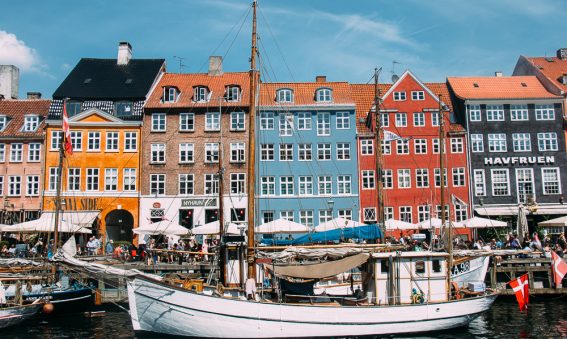
My favorite part is Nyhavn,a fishing harbor dating back 300 years ago with many bars, restaurants in colored houses. An elder Australian couple came to me when I was having a brake to ask me for directions. We had some smalltalk and I explained them what I was doing. They are from Sydney and offered me a place to stay if I’m there, great to have a place to stay at the finish line.
Around 5 I started to feel tired and decided to go to my next stop. It was in Roskilde, 30km outside of CPH and famous for it’s festival. Mads was my host and I already met him at the FDEL meeting last Sunday in Vejle. He has a big house right at the Fjord. From his garden you can walk on a pier where he has a big boat. The sights here are amazing. I could sleep in a small house in his garden.
Mads is very interested in sustainability and e-mobility. He has a background as engineer ands just founded his own company where he combines all of that. For companies he creates sustainable solutions such as heating and energy production.
His own his is carbon neutral too, he creates electricity with solar panels and a heat pump takes the warmth out of the water and creates heat in the house. He has two daughters. The oldest one, Sofie, was just about to go on a trip to London as a preparation for her study. She will going to visit the House of Unions and see David Cameron speak. His youngest daughter Emma is a fashion blogger and has 16.000 followers on Instagram, very impressive as she is only 15.
After dinner and an ice cream in the old Viking harbor we drove to a testsite from Vestas, a Danish windmill producer. They just installed a new windmill which has 4 mills attached to it. This one was “small” and if all the test succeed they built a bigger one which could produce 4×16 Gigawatt.
Almost everything that Mads has is electric, also his bike. In Denmark they have a few rules for e-bikes but Mads wants to go faster then allowed so he tweaked it a bit. He bike has a topspeed of 50km/h which is very fast for a bike. I drove it and it is cool to drive it. When you step just a little bit you already go fast, it’s like you use a turboboost with Mario Kart.
To provide the best experiences, we use technologies like cookies to store and/or access device information. Consenting to these technologies will allow us to process data such as browsing behavior or unique IDs on this site. Not consenting or withdrawing consent, may adversely affect certain features and functions.
Functional
Always active
The technical storage or access is strictly necessary for the legitimate purpose of enabling the use of a specific service explicitly requested by the subscriber or user, or for the sole purpose of carrying out the transmission of a communication over an electronic communications network.
Preferences
The technical storage or access is necessary for the legitimate purpose of storing preferences that are not requested by the subscriber or user.
Statistics
The technical storage or access that is used exclusively for statistical purposes.The technical storage or access that is used exclusively for anonymous statistical purposes. Without a subpoena, voluntary compliance on the part of your Internet Service Provider, or additional records from a third party, information stored or retrieved for this purpose alone cannot usually be used to identify you.
Marketing
The technical storage or access is required to create user profiles to send advertising, or to track the user on a website or across several websites for similar marketing purposes.